





 Summarize with ChatGPT
The modern food industry has changed dramatically over the last decade.
Today’s consumers are more informed, more conscious, and more selective about the food they buy than ever before. People no longer simply choose products based on taste or convenience alone – they want to know where ingredients come from, how products are made, and whether the businesses behind them operate responsibly and transparently.
For food brands, cafés, restaurants, retailers, and hospitality operators, trust has become just as important as flavour.
That’s why food certifications matter more than ever.
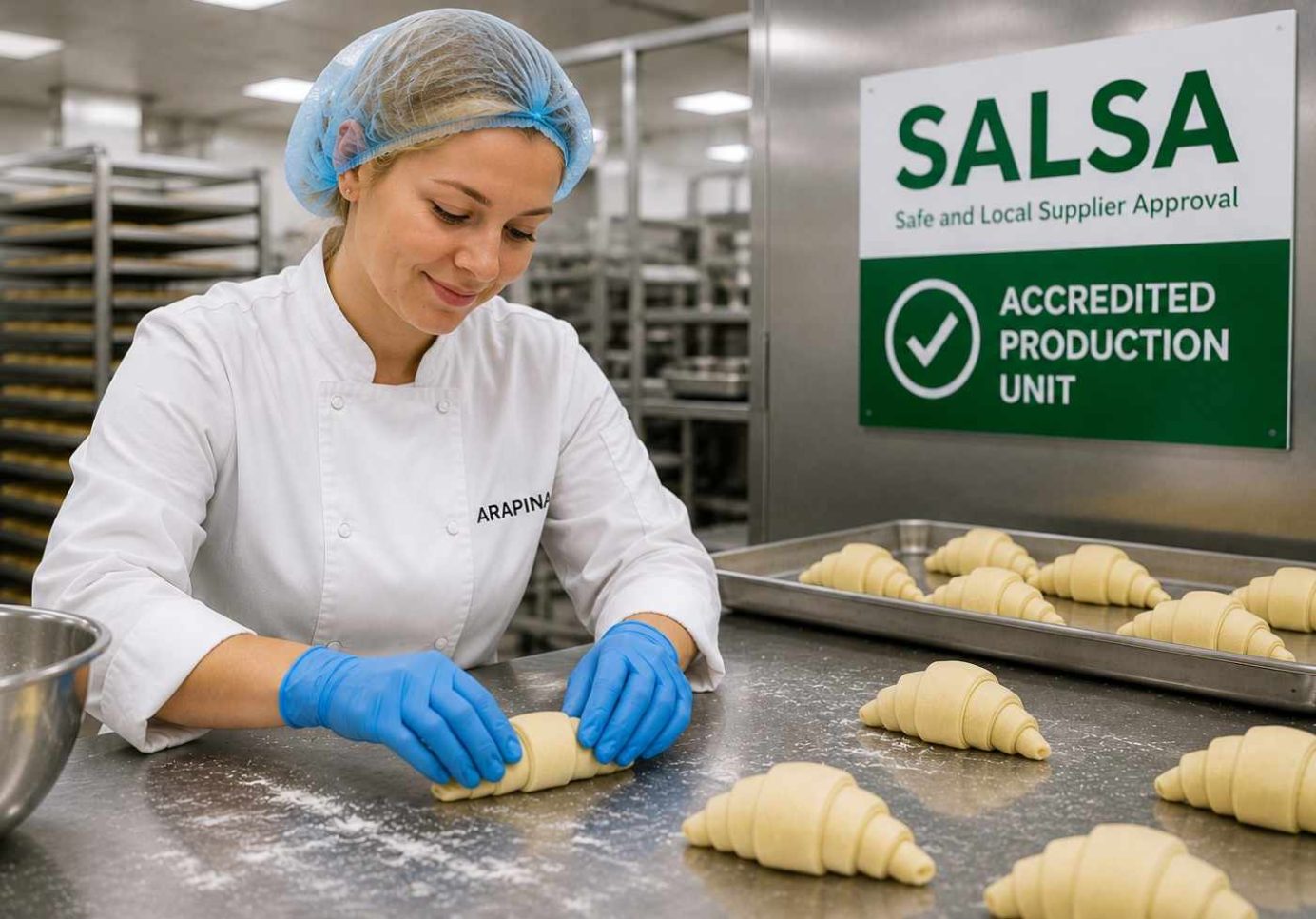
At Arapina, certifications are not viewed as paperwork or box-ticking exercises. They are part of a wider commitment to quality, transparency, safety, and accountability – values that are essential in today’s food landscape, especially as we continue to grow our wholesale and hospitality partnerships through our new SALSA-accredited Central Production Unit.
The rise of the conscious consumer
Consumer behaviour has fundamentally shifted.
People are reading labels more carefully. They are asking questions about allergens, sourcing, sustainability, and manufacturing practices. They expect clarity around vegan, gluten-free, and free-from claims. And increasingly, they want reassurance that the brands they support operate to recognised standards.
This growing awareness has placed greater responsibility on food businesses to prove – not just promise – that their products meet high standards.
Certifications help bridge that trust gap.
They provide independent verification that a business is operating safely, responsibly, and consistently.
For customers, that creates confidence. For businesses, it creates credibility.
Transparency is no longer optional
In today’s market, transparency is expected.
Whether someone is buying a pastry from a café counter or sourcing products for a national hospitality group, there is an increasing demand for visibility across the entire supply chain.
How are products produced?
Are allergens properly managed?
Can ingredients be traced?
Are food safety systems documented and monitored?
Certifications like SALSA help answer those questions before they even need to be asked.
They demonstrate that robust systems are already in place – from HACCP procedures and traceability controls to hygiene standards and operational consistency.
At Arapina, transparency is particularly important because we specialise in plant-based products, where trust and accuracy are critical. Customers and partners need confidence that claims around ingredients, allergens, and production standards are properly protected at every stage.
Our SALSA accreditation reinforces that commitment.
Why certifications matter for hospitality partnerships
For hospitality operators, choosing the right supplier is about much more than finding a good product.
Hotels, cafés, luxury food halls, and restaurant groups are protecting their own reputation every time they introduce a supplier into their business.
They need confidence that their partners can:
- Maintain consistent quality
- Operate safely at scale
- Meet regulatory standards
- Handle traceability requirements
- Support operational reliability
- Deliver products consistently across multiple locations
Certifications provide assurance that these systems already exist and are actively maintained.
This becomes especially important as plant-based demand continues to grow. Hospitality businesses are actively expanding vegan and free-from offerings, but they also need suppliers capable of supporting that growth professionally and reliably.
That’s where Arapina’s new Central Production Unit positions us differently.
As the UK’s only vegan and SALSA-accredited pastry production facility of its kind, we are uniquely equipped to combine artisan quality with the operational standards expected by modern hospitality and wholesale partners.
Retail and wholesale credibility
For wholesale buyers and retail partners, certifications act as a form of operational trust.
- They simplify supplier approval processes.
- They reduce perceived risk.
- And they demonstrate readiness for larger-scale commercial partnerships.
In competitive retail and wholesale environments, certifications can often become the deciding factor between a supplier that is considered “promising” and one that is considered “ready.”
At Arapina, achieving SALSA accreditation represents an important milestone in that journey.
It signals that our production systems, food safety controls, and operational standards are aligned with the expectations of larger-scale partnerships – without compromising the handmade quality and creativity that define our brand.
Higher standards, better business
Ultimately, certifications are not just about compliance.
They are about building better food businesses.
- Businesses that are transparent.
- Businesses that prioritise safety and accountability.
- Businesses that customers and partners can trust long-term.
For Arapina, our investment in higher standards reflects our belief that the future of food belongs to brands that combine exceptional products with operational integrity.
As consumer expectations continue to evolve, certifications will only become more important – not just for large manufacturers, but for artisan brands looking to scale responsibly.
Because in modern food businesses, trust is no longer built through marketing alone. It’s built through standards, consistency, and proof.